
| Nov 07, 2025
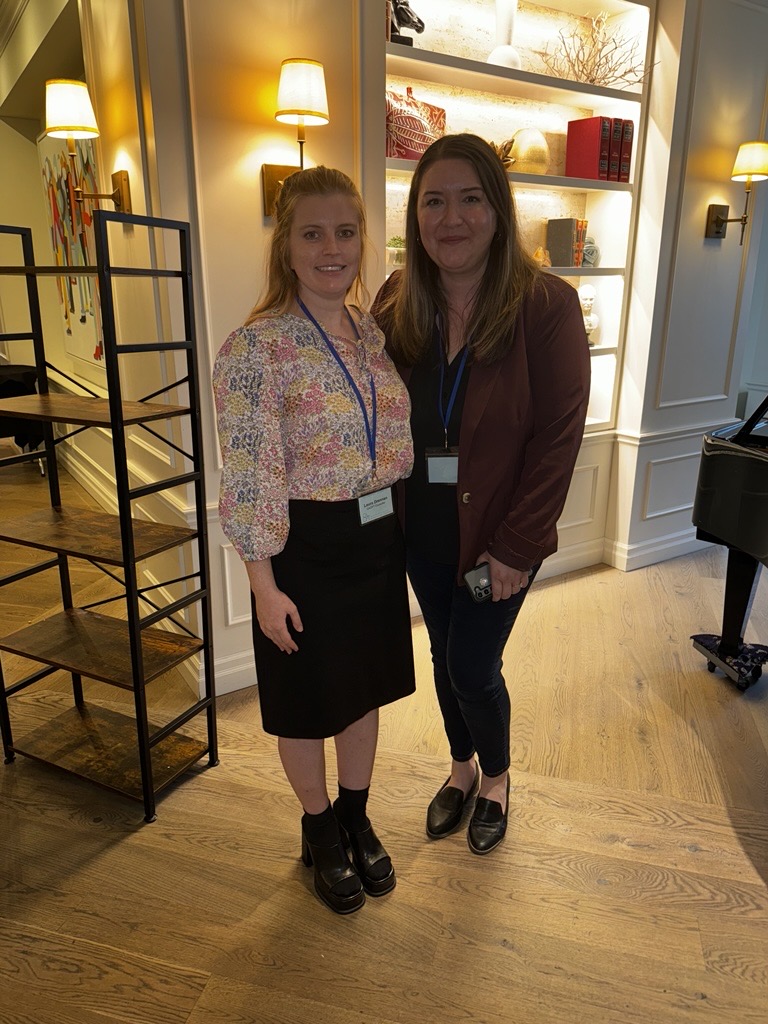
On November 7, 2025, members of our team attended this year’s Canadian Association of Certified Planning Technicians (CACPT) Conference, hosted by the City of Kitchener at the historic Walper Hotel. Representing UrbanSolutions were Laura and Stephen, who both sit on the CACPT Council, along with Stefano from our office. UrbanSolutions was proud to be a Gold Sponsor of this year’s event, supporting a day dedicated to collaboration, learning, and celebrating the profession of planning.
This year’s theme, “Adaptable Reuse in Planning,” brought together planners, consultants, and municipal leaders to explore how we can reimagine spaces and systems to meet the evolving needs of our communities. The event featured five insightful speakers who shared innovative approaches to growth, heritage, and sustainability across Canada.
The conference kicked off with the City of Kitchener’s presentation, “Tracks to Transformation: Kitchener’s Story of Growth, Housing and Policy Innovation.” Presenters Ryan Dunham, Natalie Gross, Victoria Grohn, and Janine Oosterveld offered an engaging look at Kitchener’s approach to public consultation for infill design and teased the much-anticipated draft Official Plan.
Next, Zoe Morrison from Stantec took us north with “North of Ordinary – Planning for Growth in Dawson City, Yukon.” Zoe highlighted the unique challenges of development in northern climates, including permafrost, flooding, and the impacts of melting ice. A standout example was Dawson City’s community centre, which is actively sinking—prompting collaboration between the Yukon Government, local First Nations, and builders to design a resilient new facility. Zoe also highlighted the territory’s push to conserving a sense of place in new builds, having regard for architectural styles prominent throughout
the years of the Gold Rush.
MHBC followed with “Mapping the Past, Planning for the Future – Customized GIS Systems to Facilitate Changes in Cultural Heritage Policy.” Jasmin Brinovcar, Vanessa Hicks, and Andrea Sinclair demonstrated an impressive heritage database developed for the Streetsville Heritage Conservation District, now being shared with the City of Mississauga to help integrate heritage mapping into municipal systems.
Dr. Rylan Graham then presented “Growth and Development in Mid-Sized Canadian Cities: Past Lessons, Future Directions.” Using Prince George, B.C. as a case study, he explored trends showing population growth shifting toward suburban areas and the increasing focus on “missing middle” housing. Dr. Graham also highlighted the peculiar case of Kelowna, B.C., where unlike other similarly sized mid-size cities, it has seen a large shift in populations moving to downtown areas rather than car-reliant suburbs. Key topics focus on revolved around what factors make a downtown desirable to live in, and what planners in
other mid-sized cities can learn from Kelowna and adopt in their own jurisdictions.
The final presentation, “Heritage Preservation Beyond Buildings: Reimagining Adaptive Reuse,” was delivered by Kourosh Rad from Evergreen. Kourosh took attendees on a virtual tour showcasing remarkable adaptive reuse projects—from the Green Lantern Building restoration in Halifax to Toronto’s Evergreen Brick Works, a shining example of sustainable heritage transformation on a 17-acre site.
A huge thank-you to the CACPT, the City of Kitchener, and the Walper Hotel for hosting such an inspiring and informative day. Events like these remind us how creativity and collaboration continue to shape the future of planning across Canada. Congratulations to all of the award winners, and great job to the students in attendance—it was wonderful to see so many future planners networking and engaging with industry professionals. We look forward to next year’s conference and to continuing our support of CACPT and the
incredible work being done across the planning community.